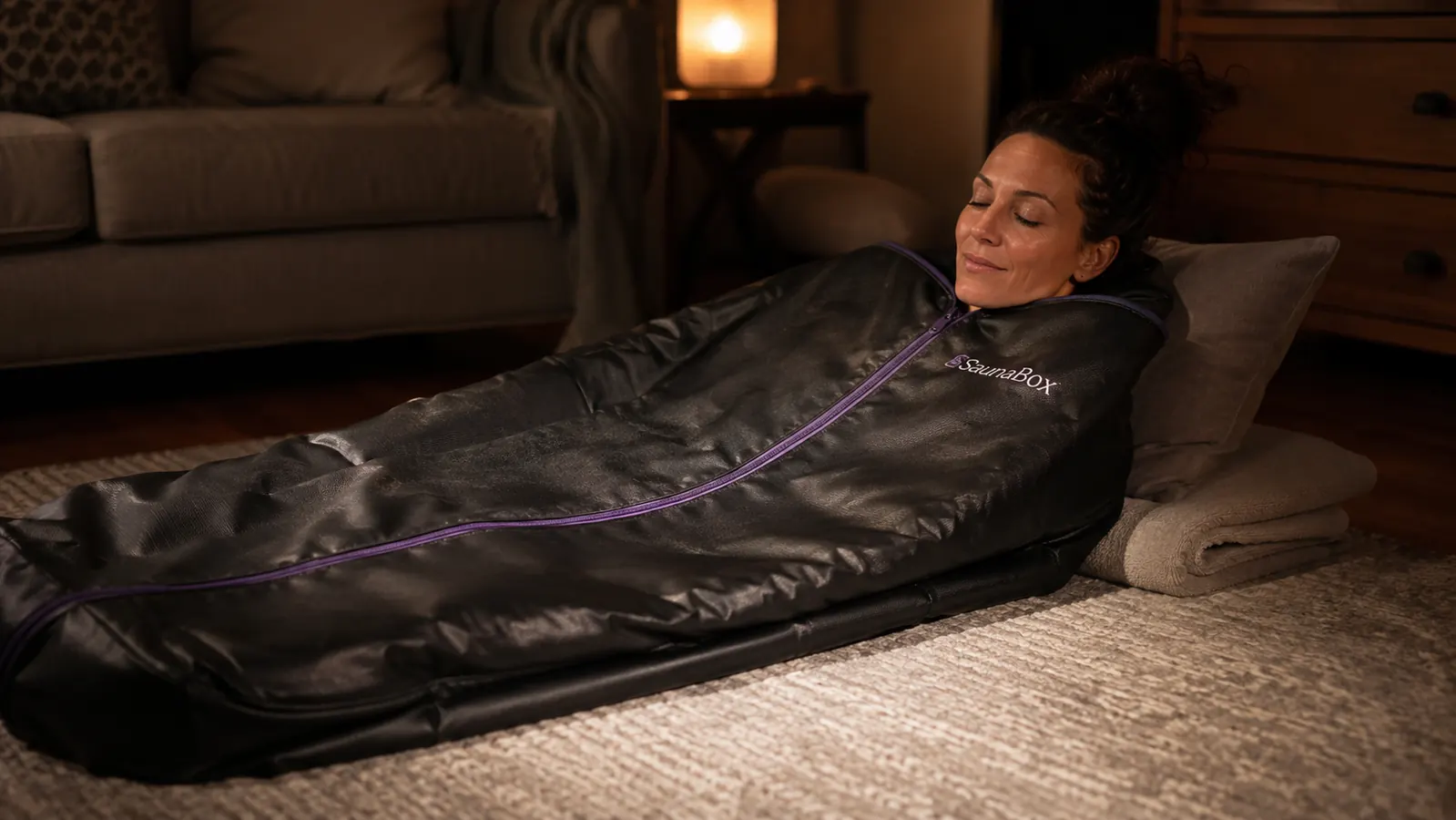
The first time I unzipped my Lifepro RejuvaWrap infrared sauna blanket and climbed inside, I felt a little ridiculous, like I was about to become a burrito with an opinion. Eight months later, wrapping up in my Lifepro RejuvaWrap four nights a week is just something I do after the kids are in bed, the same way other people pour a glass of wine or run a hot bath. If you've been circling the idea of an infrared sauna blanket for detox and relaxation but aren't sure how the whole process actually works, from unrolling it for the first time to knowing when to unzip and step out, this guide walks through exactly what I do, step by step, using the RejuvaWrap as the reference model since it's the one currently living on my bedroom floor three or four nights a week.
I want to be upfront about the word detox, since I'm using it here the way most people mean it in casual conversation, not as a medical claim. Nothing in this guide implies your liver needs help or that sweating flushes out toxins in some measurable way. What I'm talking about is a specific, repeatable feeling: stepping out after forty five minutes of deep heat with your skin flushed, your shoulders loose, and your head noticeably quieter than when you climbed in. That's the experience these steps are built around, and this is the exact sequence that gets me there safely and consistently, session after session. It took me roughly three weeks of trial and error to land on this routine, and I'd rather hand it to you already worked out than let you make the same small mistakes I did in month one.
Ready to Build This Into Your Evening Routine?
This whole guide is built around the infrared sauna blanket I actually use. If you want to follow along step by step with the same model, here's the one on my bedroom floor tonight.
Amazon Check Today's Price on Amazon →Step 1: Set Up Your Space Before You Turn Anything On
An infrared sauna blanket needs a flat, stable surface, not a soft mattress or a squishy rug where it can bunch up under you. I lay mine on the carpet in our bedroom, but I put a folded bath towel or a thin yoga mat underneath it first. This does two things: it keeps the exterior shell clean, since you will sweat through the liner over time, and it gives you a slightly firmer surface to lie on than carpet alone, which matters once you're in there for forty minutes.
Pick a spot near an outlet so the cord isn't stretched tight or running under anything you'd trip on getting up. I also keep a glass of water and my phone within arm's reach before I zip in, because once you're sealed up to the neck, you don't want to be unzipping and re-zipping every five minutes to grab something you forgot. A small towel nearby for your forehead is worth having too, since your face and neck will be the only parts exposed to room temperature air and they'll still work up a light sweat.
Room temperature matters more than people expect. If your bedroom runs cold in the winter, that's actually fine and even a little pleasant, since the contrast between the cool air on your face and the heat wrapped around your body is part of what makes the whole thing feel good. If your room is already warm and stuffy, though, cracking a window or running a small fan nearby makes the session far more comfortable, especially in the first ten minutes while your body is adjusting.
Step 2: Preheat It and Choose a Starting Temperature
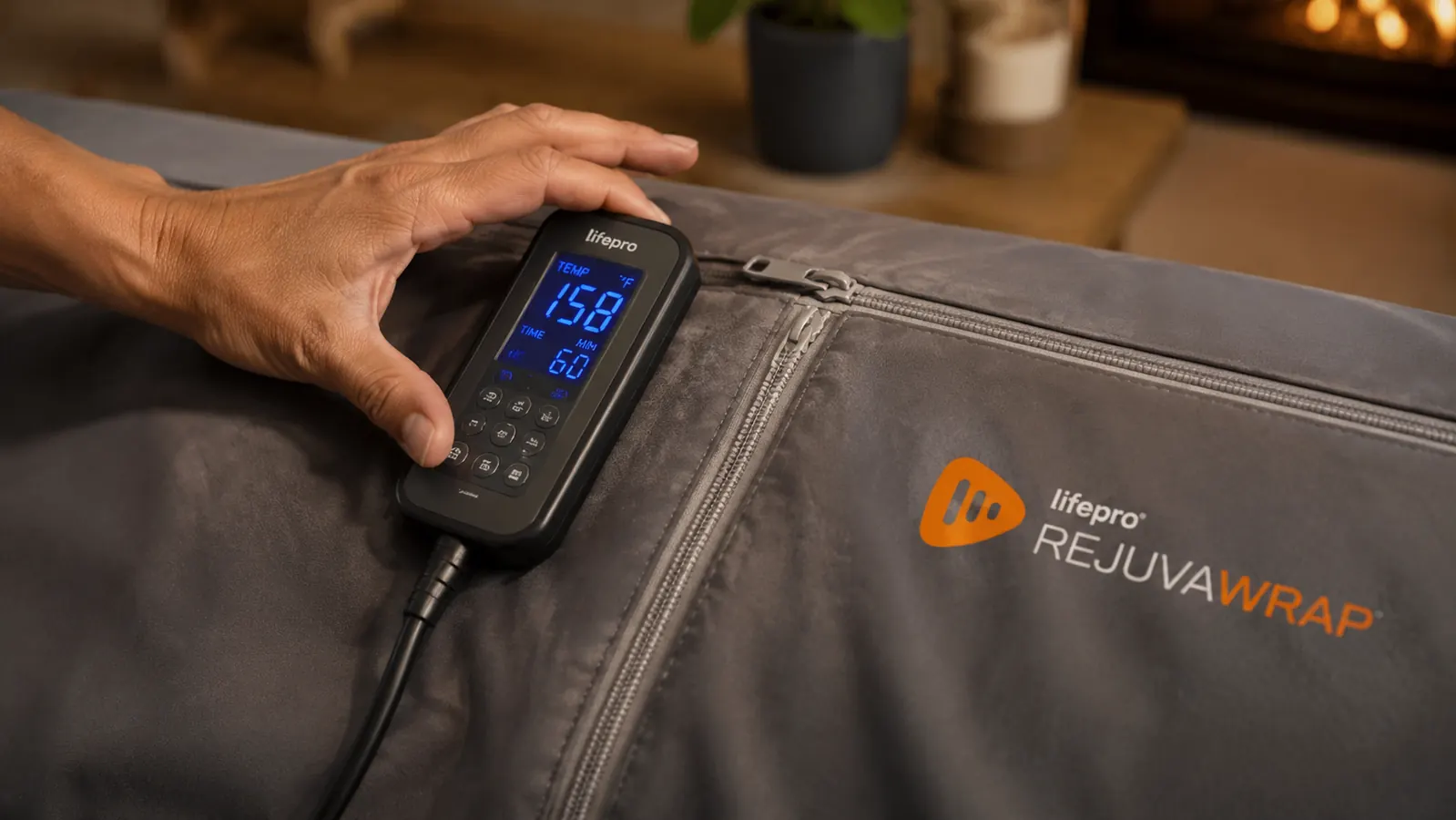
The Lifepro RejuvaWrap has nine temperature levels, and one mistake almost everyone makes in their first week is cranking it straight to the highest setting because they assume hotter equals better results faster. I did this on night two and ended up unzipping after twelve minutes, overheated and a little annoyed. Now I always preheat for about eight to ten minutes on a mid level setting, roughly level four or five, before I even get in. You can feel the interior warming through the fabric, which is your cue that it's ready.
For your very first few sessions, I'd genuinely recommend staying in that mid-range zone rather than chasing the highest number on the dial. Your body needs time to adapt to sustained infrared heat the way it needs time to adapt to a hot tub you've never used before. After about two weeks of regular use, I started climbing to level six or seven for my main sessions, and I only touch the top couple of levels occasionally, usually on nights when I'm particularly stiff or stressed and want a shorter, more intense session instead of my usual long, slow one.
One detail that surprised me: the temperature inside the blanket doesn't feel uniform the way an air-heated cabin sauna does. You'll notice more direct warmth against your back and legs where the carbon fiber panels sit closest to your skin, and slightly less against areas with more airspace, like around your torso if you're not lying perfectly flat. That's normal and it's part of how infrared heating works compared to steam or convection heat.
Step 3: Get In and Seal Up the Right Way
Sit down on top of the unzipped blanket first, then swing your legs in and lie back, pulling the sides up around you before zipping from the bottom toward your chest. I leave a few inches of slack around my shoulders rather than zipping it snug all the way to my chin, mostly for comfort and so I can shift position slightly without feeling boxed in. There are separate sleeve openings for your arms if you want to read or scroll your phone, though I mostly keep my arms tucked inside for the first twenty minutes until I've settled into the heat.
Your head and neck stay outside the blanket the entire time, which is an important safety point worth repeating: nothing about using an infrared sauna blanket for detox or relaxation should involve covering your face or restricting your airway. If you ever feel lightheaded, overly warm in the face, or just uneasy, the zipper is designed to be easy to reach and undo one-handed from the inside, which I've tested more than once when I misjudged how hot I'd set it.
I keep a small towel folded under my neck where the fabric edge sits, since that seam can feel a little stiff against bare skin during a long session. Wearing a thin cotton layer, like an old t-shirt and leggings, instead of going in with bare skin also makes the heat feel a touch gentler and gives you something to change out of afterward instead of climbing straight into damp sheets.

Step 4: Pace Your Sessions and Build Up Gradually
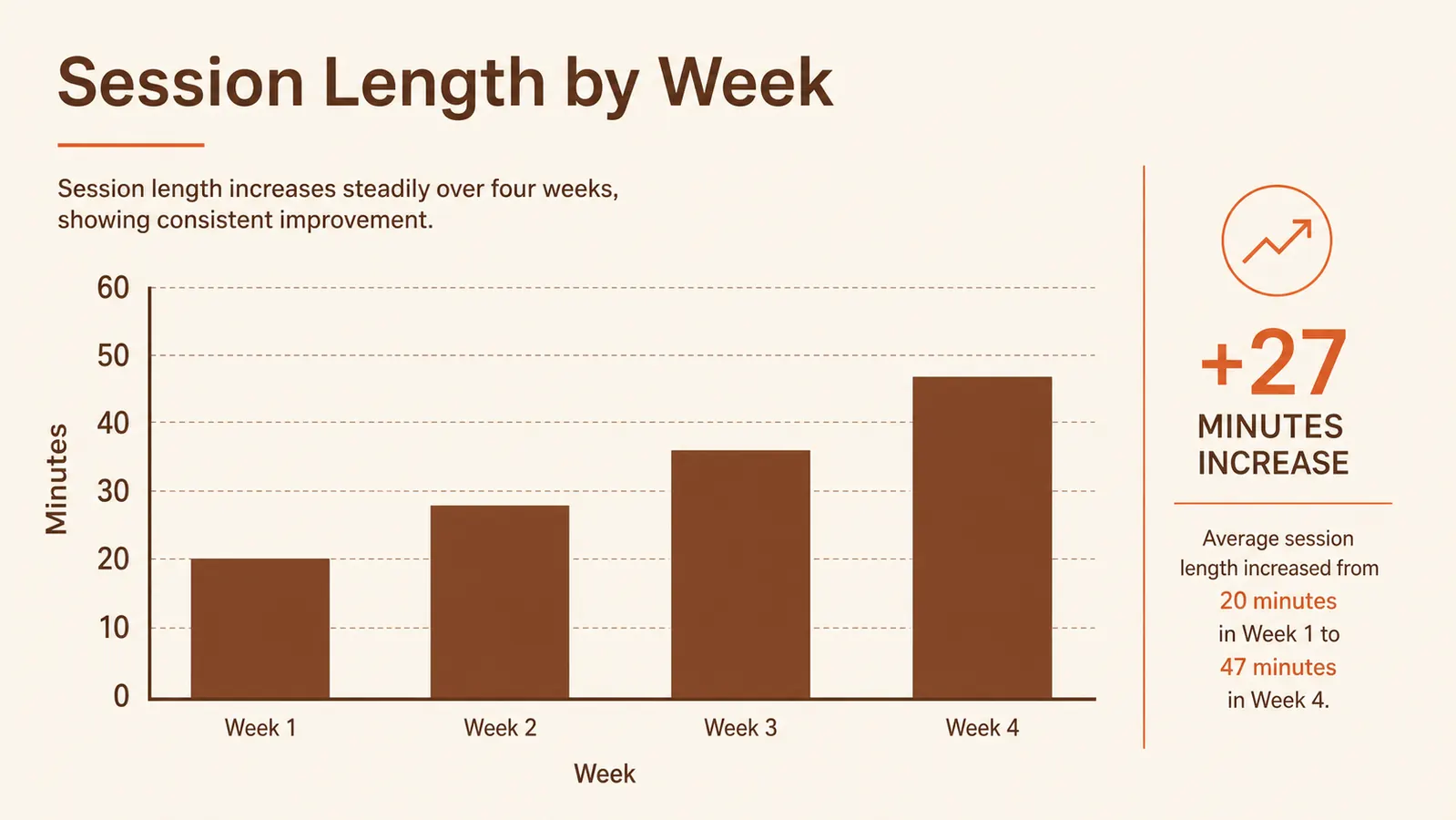
My first session lasted eighteen minutes before I'd had enough. That's completely normal and nothing to be discouraged by. I'd suggest starting with twenty to twenty five minutes for your first week, three or four times if your schedule allows, then adding five or ten minutes each week after that as your body gets used to sustained heat. By week four I was comfortably doing forty five to fifty minutes most nights, and I still don't go much past an hour even now, mostly because that's where I personally stop enjoying it rather than any strict rule.
Listen to your body more than the clock. Some nights I'm out at thirty minutes because I'm tired or just not feeling settled, other nights I'll go the full fifty because I'm genuinely relaxed and could keep going. The point of building a routine around an infrared sauna blanket isn't to hit a personal record every time, it's to make this a repeatable part of your evening that you actually look forward to instead of dread.
I'd also add that consistency beats intensity here. Three shorter sessions a week for a month did more for how loose my lower back felt than one marathon ninety minute attempt ever did, and it was a lot easier on my schedule too. If you miss a few nights because life gets busy, just pick back up at a slightly shorter session rather than trying to make up for lost time in one sitting.
Step 5: Cool Down and Clean Up Properly
When you're ready to get out, unzip slowly and sit up for a minute before standing, since you may feel a little lightheaded going from lying flat and warm to upright too quickly. I always have water waiting and drink most of a glass within the first few minutes of getting out, since you'll have sweated more than you think even though you can't see it happening the way you would in a steam room.
Wipe down the interior liner with a damp cloth once it's cooled, since sweat residue left overnight is what eventually causes odor or wear in the fabric. I unzip mine fully open and let it air out flat for twenty minutes or so before folding it back up for storage, rather than rolling it away still warm and slightly damp. This one habit alone has kept mine smelling fine and the liner in good shape well past the point I expected it to start showing wear.
I also give the exterior a quick wipe with a barely damp cloth every couple of weeks, since hands and forearms brush against the outside fabric getting in and out. It only takes a minute, and it's made a noticeable difference in how fresh the whole thing feels eight months in compared to how I imagine it would look if I'd never bothered.
What Else Helps
A few small additions have made a noticeable difference in how I feel afterward. Drinking water before the session, not just after, keeps me from feeling drained the next morning. I also keep a cool, damp washcloth nearby for my forehead if a session runs long and my face starts feeling warmer than I'd like. On nights I take a short cool rinse in the shower right after unzipping, the contrast leaves me feeling noticeably more alert and settled than just toweling off does.
Timing matters too. I've found sessions work best about two hours after my last meal rather than right after dinner, since lying flat and warm on a full stomach is uncomfortable no matter how good the heat feels otherwise. And doing it consistently, even just three nights a week, has mattered far more for how I feel overall than chasing the longest possible session once or twice a month.
A small electrolyte packet in my water on the nights I go past forty minutes has also made a real difference in how I feel the next morning, especially in summer when the house already runs warmer. It's a small thing, but it's part of why this has stayed a habit instead of turning into something I quietly stopped doing after a few weeks like a lot of wellness gadgets end up.
It stopped being a wellness experiment somewhere around week three and just became the thing I do before bed, the way other people stretch or brush their teeth.
Follow This Same Routine Tonight
Everything in this guide is built around one specific infrared sauna blanket, the one I've used four nights a week for the past eight months. If you're ready to start your own routine, here's the exact model.
Amazon Check Today's Price on Amazon →