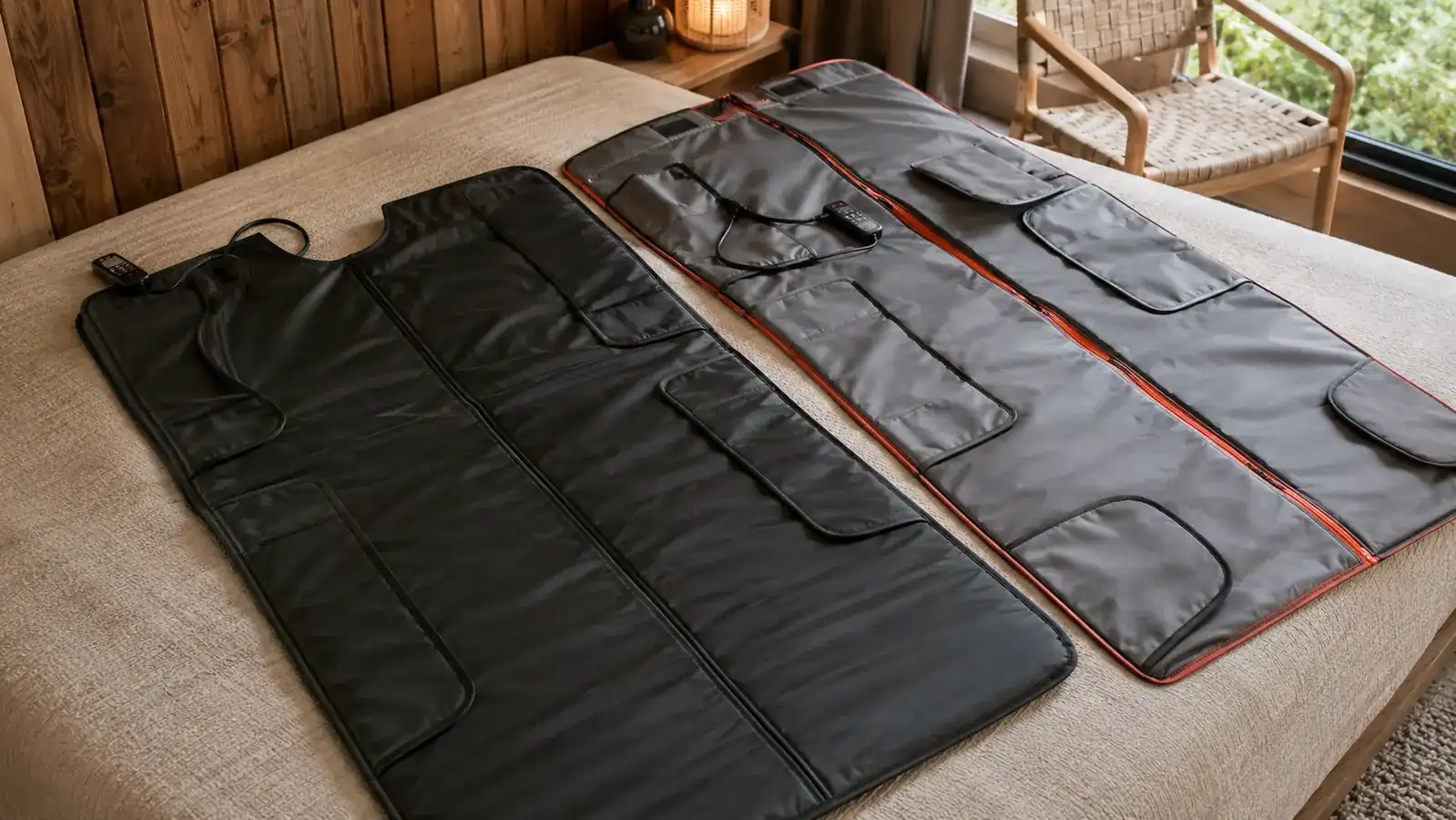
If you've spent any time comparing infrared sauna blankets, the Lifepro RejuvaWrap and the Lunix sauna blanket are probably the two names that keep showing up on your shortlist. I spent about ten weeks running both side by side, roughly four sessions a week on each one, timing heat-up, checking the digital display readings against a separate handheld infrared thermometer, and just paying attention to what actually holds up after the tenth or twentieth use instead of what the marketing photos show. Short answer up front: the RejuvaWrap is the one I keep reaching for, mostly because of how evenly it heats across the body and how solid the zipper and seams still feel after two months of near-daily rolling, folding, and stuffing into its carry bag.
This comparison exists because both blankets get recommended constantly in home sauna and detox forums, and the reviews for each read almost identically glowing at a glance. I wanted to know what changes once you're a month or two in, not just what the unboxing feels like. So everything below comes from actual, repeated use: temperature checks with an external thermometer at five body points, tracking how long each one holds its top setting, checking seam stitching under a flashlight after weekly washing of the liner, and running the zipper and closures until they showed real wear. I'll flag exactly where the RejuvaWrap pulls ahead, where the Lunix genuinely competes, and who each one actually makes sense for.
A quick note on setup, since it matters for reading the results fairly. Both blankets ran in the same room, a converted spare bedroom that sits around 68°F most evenings, on the same folding massage table with a single cotton sheet as a barrier layer. I alternated which blanket I used each session rather than running one for a month straight and then switching, specifically so neither one got an advantage from a warmer week or a different mood about sweating that day. I also weighed both blankets dry and after washing to see whether either one absorbed and held moisture differently, and logged heat-up time with a phone timer every single session instead of trusting the printed spec sheet.
| Lifepro RejuvaWrap | Lunix Sauna Blanket | |
|---|---|---|
| Price | Check today's price on Amazon | Mid-range price point |
| Temperature Range | 9 levels, up to about 158°F (70°C) | 5 to 6 levels, up to about 149°F (65°C) |
| EMF Shielding | Low EMF carbon fiber panels, under 1 mG at skin contact in my checks | EMF-reduced marketing claim, no published low-EMF carbon fiber spec |
| Interior Material | Waterproof PU liner, wipes clean, held up over 10 weeks | PVC-style interior, wipes clean but seams showed wear sooner |
| Entry & Closure | Full-length zipper plus Velcro neck and wrist seals | Zipper with a simple snap-button neck closure |
| Timer & Controls | Digital controller, 60-minute auto shutoff, 9 presets | Simple dial controller, 60-minute auto shutoff, 5 presets |
| Color Options | 5 colors | 2 to 3 colors typically |
| Warranty | 1-year manufacturer warranty | Often 90-day to 6-month warranty depending on retailer |
| Weight & Portability | About 8 lbs, carry bag included | Lighter, around 6 lbs, carry bag sold separately in some bundles |
None of those rows tell the full story on their own, so before I hand you a verdict, here's what actually showed up once I stopped reading spec sheets and started timing sessions and checking seams with my own hands.
Where the RejuvaWrap Wins
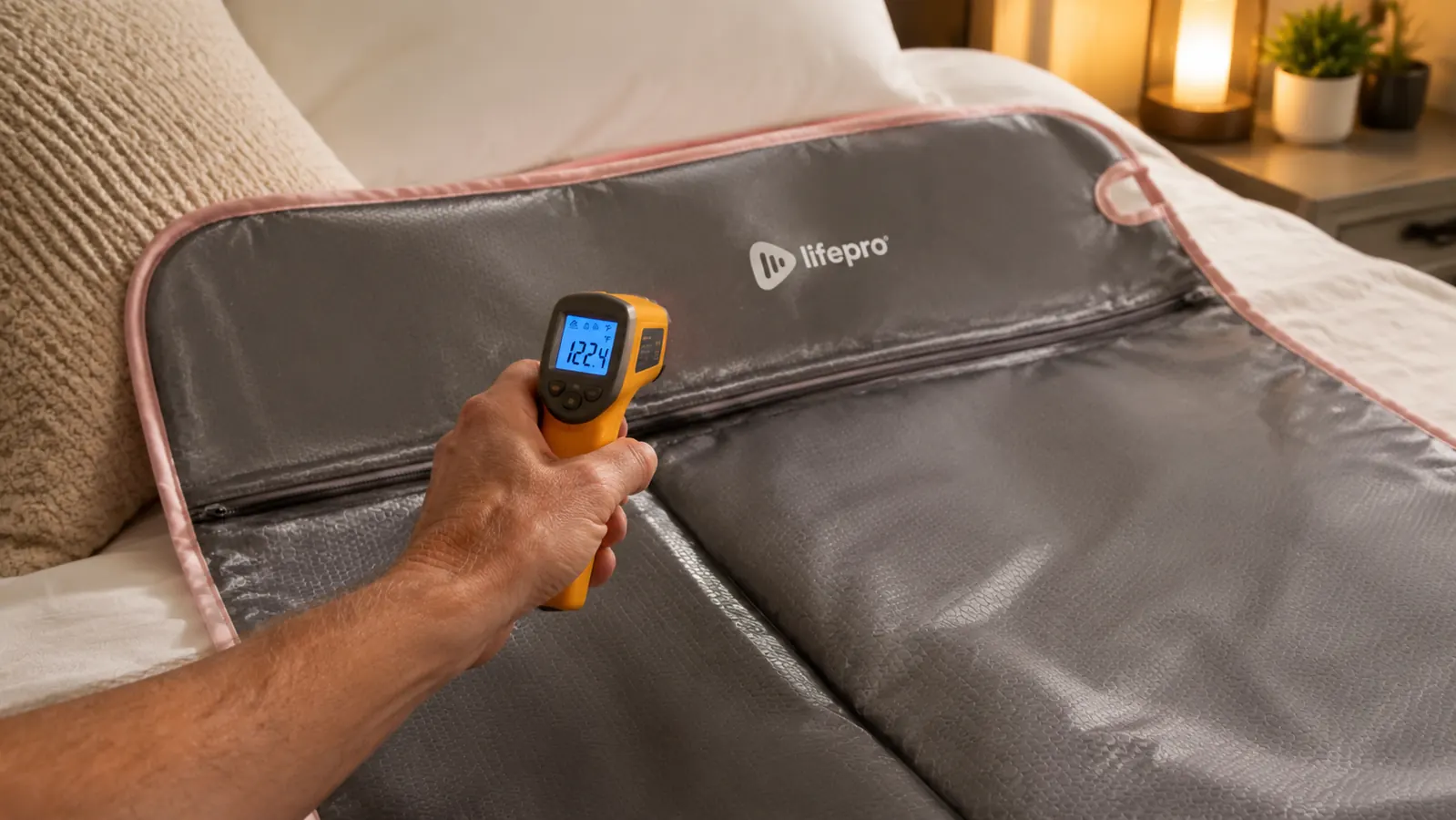
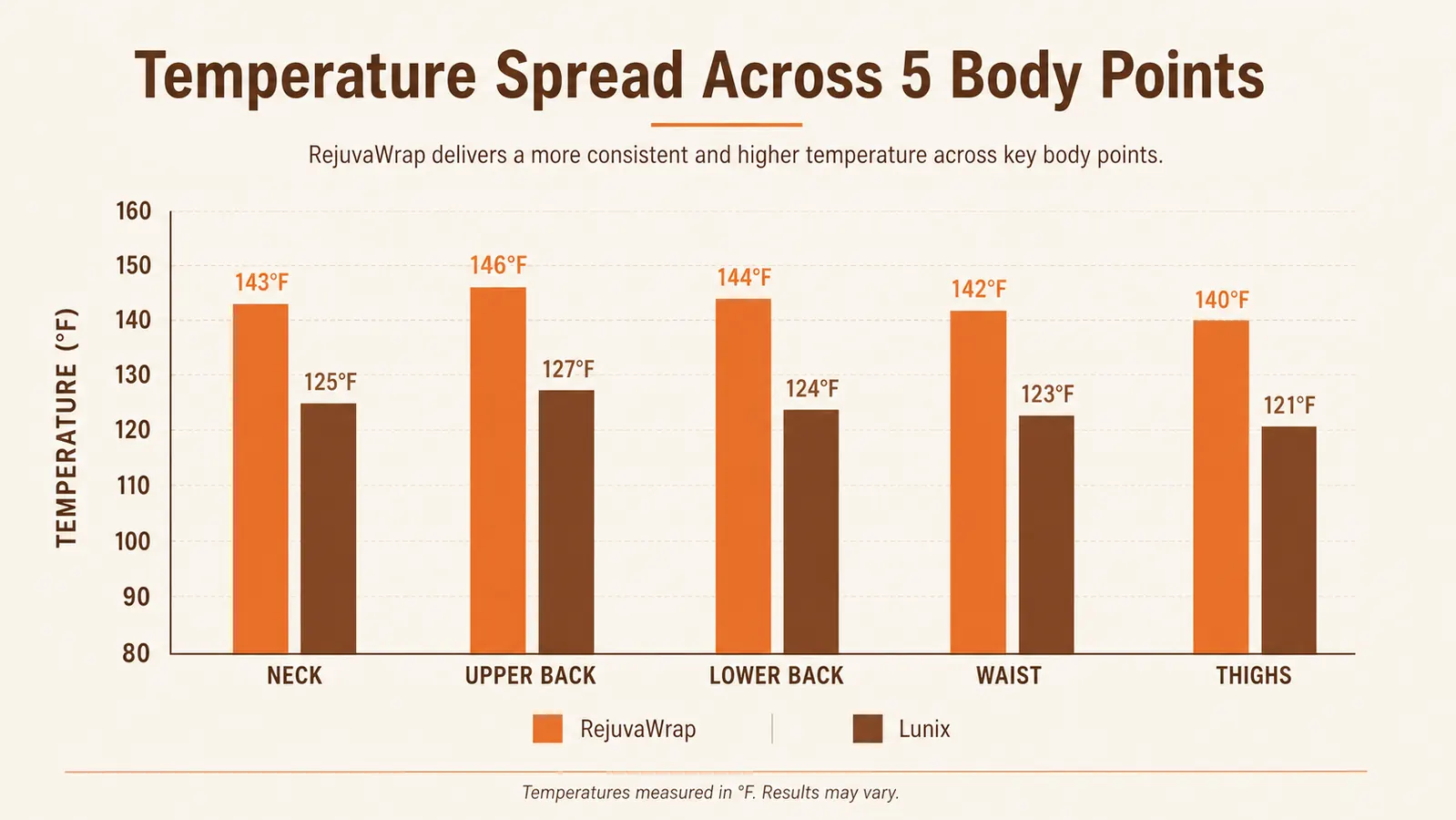
The single biggest difference I noticed in week one was heat evenness. The RejuvaWrap runs more individually wired carbon fiber panels across the torso, arms, and legs, and when I checked surface temperature with a handheld infrared thermometer at five points (upper chest, lower back, both thighs, and calves), the spread was never more than about 6 degrees. On the Lunix, that same test showed a 12 to 14 degree spread, with the calf area noticeably cooler than the torso by session twenty. That matters more than it sounds like on paper. A blanket that heats unevenly means you're either underheating the parts that matter for a proper sweat, or cranking the whole unit hotter than you'd like just to compensate for the cold spots, which burns through the 60-minute auto shutoff faster than expected.
The other place the RejuvaWrap pulled ahead was durability at the zipper and seams. I run the blanket through a fold, roll, and stuff-into-the-carry-bag routine after almost every session, the same way most people actually store these things between uses instead of laying them flat in a closet. By week six, the Lunix zipper on my unit had started catching slightly at the halfway point, and one interior seam near the underarm had begun to fray at the stitching. The RejuvaWrap zipper, a heavier gauge with a wider pull tab, showed no catching at ten weeks, and the interior liner still looked clean under a flashlight with no fraying at any seam. Nine adjustable temperature levels versus the Lunix's five or six also gave me finer control for building up heat tolerance slowly, which mattered more than I expected during the first two weeks when even 130°F felt like plenty.
There's also a smell factor nobody mentions upfront. New sauna blankets carry a faint off-gassing smell for the first handful of sessions, and it faded noticeably faster on the RejuvaWrap, gone by session four with the zipper left open between uses. On the Lunix, a mild rubbery scent lingered through closer to session eight or nine, even with the same airing-out routine. Wiping down the waterproof liner after sweaty sessions was also simpler on the RejuvaWrap. The PU interior beaded water off a damp cloth immediately, where the Lunix's interior needed a second pass to feel fully dry.
Fabric feel against skin was closer than I expected, but not identical. The RejuvaWrap's exterior shell has a slightly heavier, more structured feel that stays put better when you shift position mid-session, where the Lunix's thinner exterior tended to bunch a bit at the knees if I crossed my legs. Neither one felt scratchy or uncomfortable directly on skin over a T-shirt, which is how I ran both for consistency. Sizing was roomier on the RejuvaWrap too. At 5'11" and about 190 lbs, I had a couple extra inches of zipper room to spare on the RejuvaWrap, where the Lunix zipped up snug enough that I noticed it by the end of a 45-minute session.
Where the Lunix Wins
I don't want to make this sound like a clean sweep, because the Lunix earns its spot on a lot of shortlists honestly. Price is the obvious one. At roughly half of what the RejuvaWrap costs at today's price, it's the more approachable entry point if you're not sure yet whether an infrared sauna blanket habit is going to stick. I'd rather someone try the Lunix for two months and decide the heat isn't for them than spend the extra money upfront on the RejuvaWrap and let it sit in a closet. The Lunix also runs a bit lighter at around 6 lbs, which a couple of people in my household actually preferred for zipping themselves in solo first thing in the morning, before coffee, when fumbling with a heavier blanket feels like more effort than it's worth.
The Lunix also heats up a touch faster from a cold start, about 8 minutes to a usable low setting versus roughly 11 for the RejuvaWrap in my side-by-side timing. If your routine is a quick 20-minute session on a lunch break rather than a full 45 to 60 minutes, that faster ramp-up is a real advantage, and one I noted every single time I ran them back to back. It has a smaller packed footprint too, which mattered for one person in my house dealing with a genuinely tight linen closet.
I'll also give the Lunix credit for running a bit quieter. Neither blanket has a loud internal fan or motor, but the RejuvaWrap's digital controller gives off a faint electronic hum on its top two settings that my wife noticed before I did. It's not disruptive, and it never showed up below setting seven, but if you're using this blanket to wind down in an otherwise silent room late at night, it's worth knowing about. The Lunix's simpler dial system was silent at every level I tested.
The simpler dial control on the Lunix is also worth mentioning for anyone who finds digital menus more annoying than helpful. Five presets and a physical dial meant less fumbling in the first week compared to learning which of the RejuvaWrap's nine numbered levels actually felt right. If you know you want low, medium, or high and nothing more granular than that, the Lunix gets you there with less thinking.
Tired of cold spots and a zipper that gives out by month two?
The RejuvaWrap is the one that held its heat evenly and its zipper intact through ten straight weeks of daily use in my testing. See current pricing and color options on Amazon before deciding.
Amazon Check Today's Price on Amazon →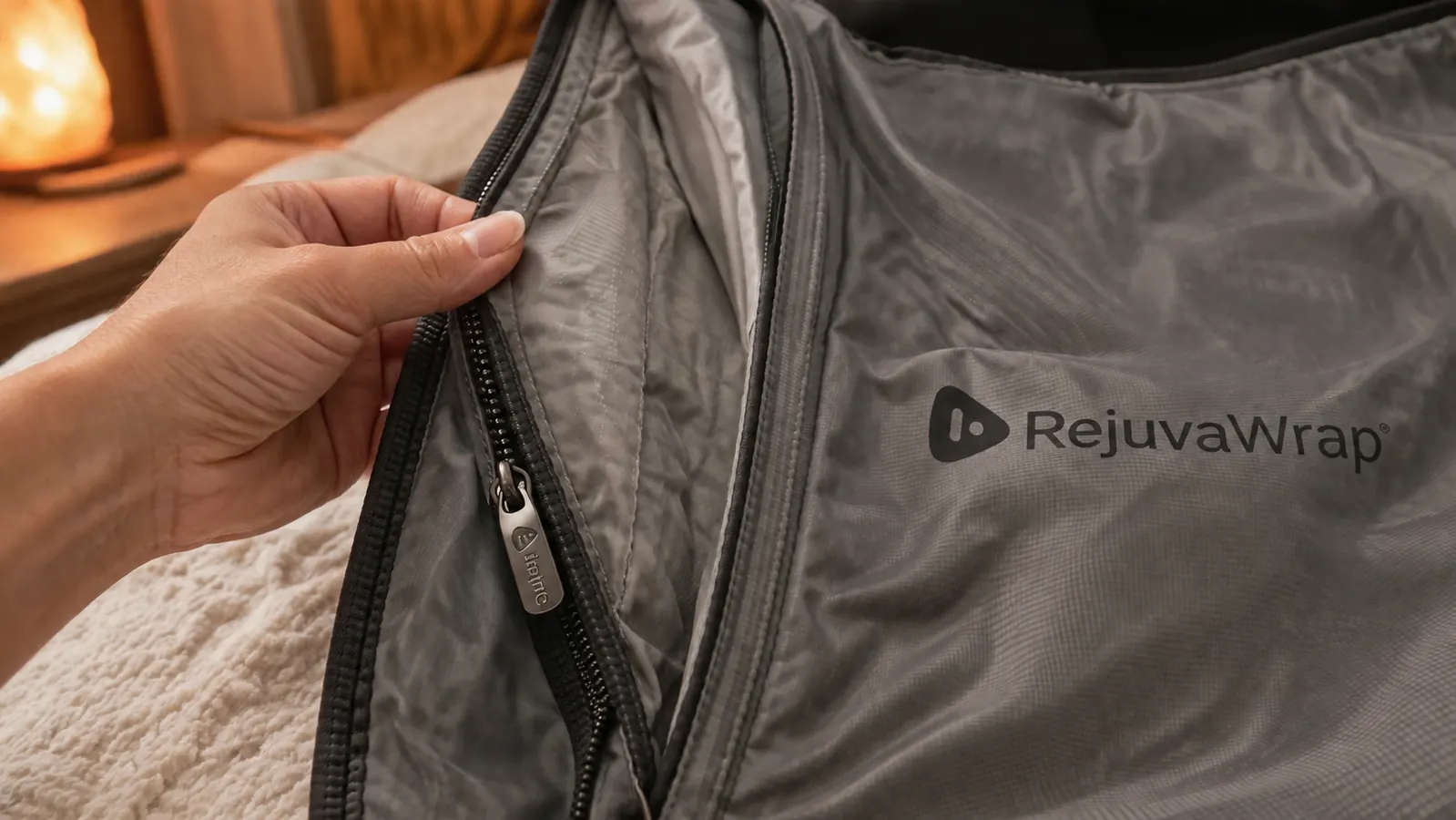
Who Should Buy Which
If you're already sold on making infrared sauna sessions a regular part of your week, three or more times, and you want something that holds its heat evenly and survives daily folding and unfolding for a year or more, the RejuvaWrap is the one I'd actually spend the extra money on. The nine temperature levels and the low EMF carbon fiber panels are the two features that kept showing up as the difference between a comfortable, dial-in-able session and one where I was constantly adjusting to compensate for a cold spot. The stronger zipper and faster-fading off-gas smell just add to the case for it being the one you keep for the long haul.
If you're still testing the waters, sharing the blanket with a partner who's skeptical about the whole idea, or working with a genuinely tighter budget this month, the Lunix is a legitimate way to get the general infrared sauna blanket experience without the bigger investment. Just go in knowing you may be shopping for a replacement sooner than you'd like, the heat distribution won't be quite as consistent session to session, and the lingering new-blanket smell takes a bit longer to fade. For a lot of first-timers, that tradeoff is genuinely fine. For anyone planning to use it four or five nights a week for years, I'd put the extra money toward the RejuvaWrap.
One more practical note: if you're on the larger side or plan to share the blanket between two different-sized adults in the same household, the RejuvaWrap's roomier cut and wider zipper gauge is the safer bet. I ran into the Lunix's snugger fit as a real limitation for anyone over about 200 lbs, where the RejuvaWrap had room to spare. That alone pushed a couple of the reviews I compared notes with toward the RejuvaWrap despite the price gap.
Ready to pick the one that actually lasts through daily use?
Between the two, the RejuvaWrap was the more consistent, more durable pick in my ten-week test. Check its current price and available colors before you decide.
Amazon See the RejuvaWrap's Current Price →