
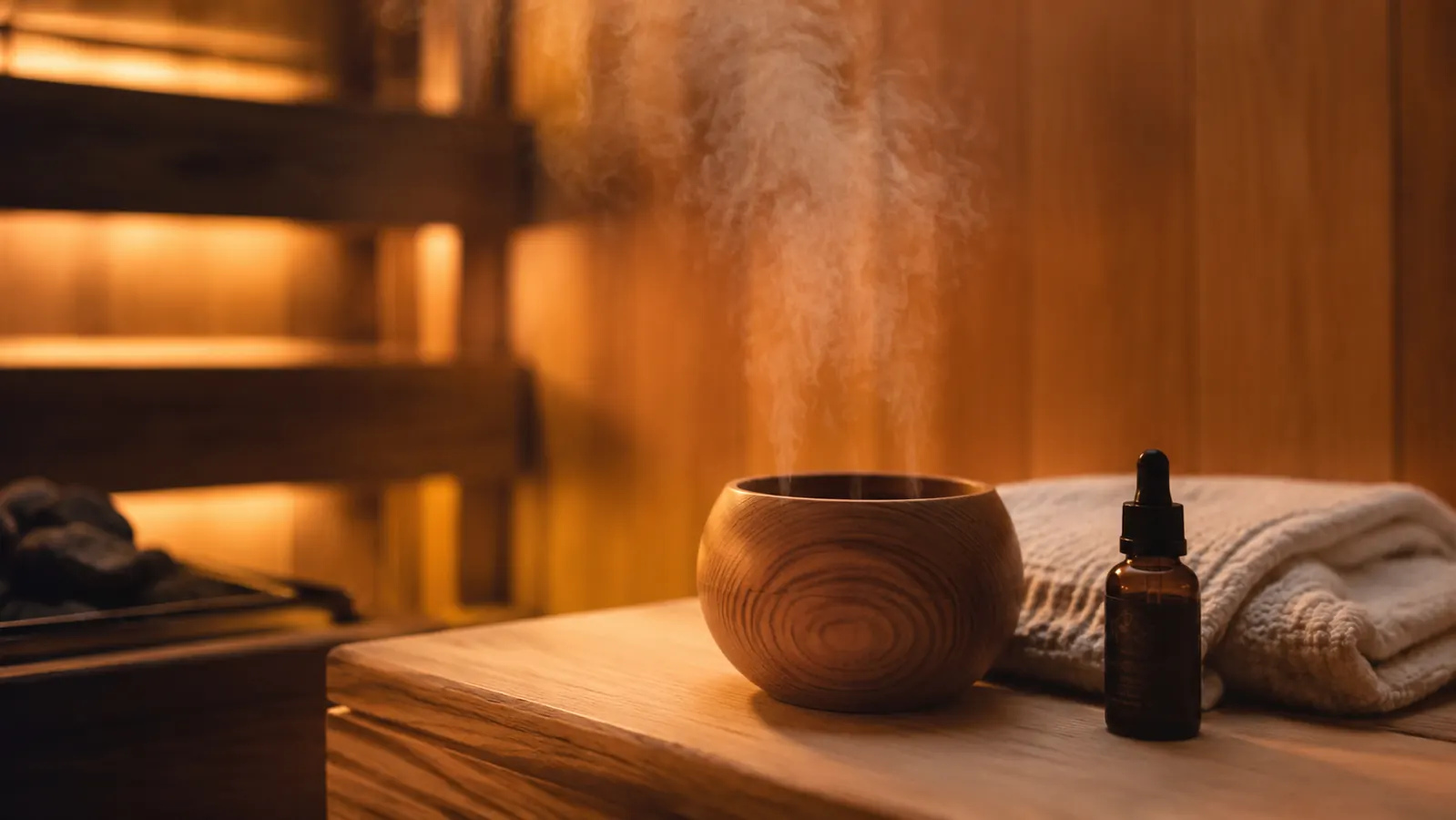
The first time I tried using essential oils in a sauna, I did the thing everyone does before they know better: I dripped eucalyptus oil straight onto the hot rocks and got about ninety seconds of a sharp, almost chemical burst of scent before it flashed off completely. The second time, I got greedy with the dropper and ended up with a headache halfway through the session because the room was so saturated I couldn't breathe comfortably. Neither of those sessions was dangerous exactly, but neither was relaxing either, and it took me a few tries and one genuinely uncomfortable evening to figure out that using essential oils safely in a sauna is less about the oil itself and more about where it sits, how much you use, and how the air in the room moves around it.
This guide walks through the five steps I now follow every time, using the Vindar red cedar aromatherapy bowl as the reference tool since it's what sits on my own sauna bench and solves most of the placement problems on its own. None of this requires special equipment beyond a small bowl and a bottle of oil you already like the smell of, but the order you do things in, and a few habits around ventilation and dosage, make the difference between a calm ritual and a session you cut short because your eyes are watering.
Tired of Watching Your Oil Burn Off Before You Even Sit Down?
The Vindar red cedar aromatherapy bowl is the tool I'm using in every step below. It gives essential oil somewhere to sit besides the rocks, which is most of what separates a pleasant scent from a headache.
Amazon Check Today's Price on Amazon →Step 1: Choose an Oil That's Actually Meant to Be Heated
Not every bottle labeled essential oil is meant to sit near heat, and this is the step people skip most often. I stick to a short list now: eucalyptus, cedar, pine, and a light lavender blend on nights when I want something calmer. These hold up well in a warm room and don't leave much residue behind. Citrus oils smell wonderful straight out of the bottle, but I've found they burn off faster than woodier scents and can leave a slightly sticky film if you use too much.
I avoid anything labeled fragrance oil rather than pure essential oil, since synthetic fragrance blends are more likely to smoke or leave a filmy residue when they get warm, which is the opposite of what you want in a small enclosed wood room. Reading the label for a moment before you buy is worth it. If a bottle doesn't say what carrier or base it's diluted in, I just don't bring it into the sauna.
I also keep a small note on my phone of which oils I've actually liked in the sauna versus which ones sounded good in the store but didn't hold up. Peppermint turned out to be one I only use for short fifteen-minute sessions since it's strong enough that a full thirty minutes of it gets a little much. Cedar and eucalyptus are the two I reach for most, partly because they smell like they belong in a wood sauna in the first place.
One safety note worth repeating even though it's not specific to any single oil: if you're pregnant, nursing, or managing any respiratory condition, it's worth checking with a doctor before adding essential oils to an enclosed hot room. Heat concentrates scent more than an open space would, and it's a quick question to ask before you build a new habit around it.
Step 2: Give the Oil Somewhere to Sit, Never Directly on the Heater
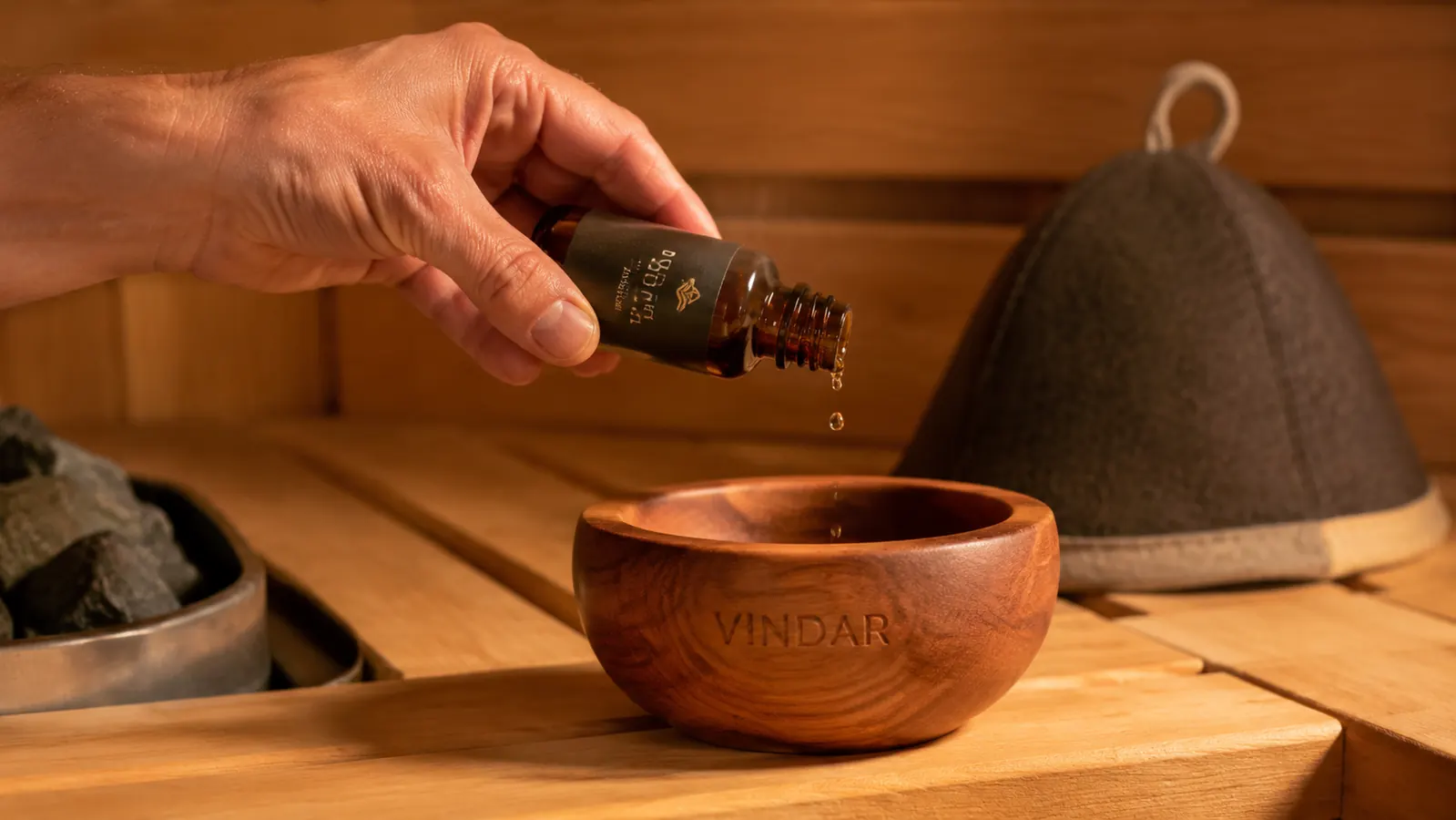
This is the single biggest safety habit in the whole process. Pouring oil directly onto hot rocks or a heater element isn't just wasteful because it flashes off in seconds, it also leaves an oily residue on the heating element over time that can smoke or smell off on future sessions, and in a wood-burning or high-heat electric unit it's simply not worth the risk of a flare-up near an open flame or exposed coil. I learned to set a small bowl a few feet away from the heater instead, close enough that the ambient warmth gently releases the scent, far enough that the bowl itself never gets hot to the touch.
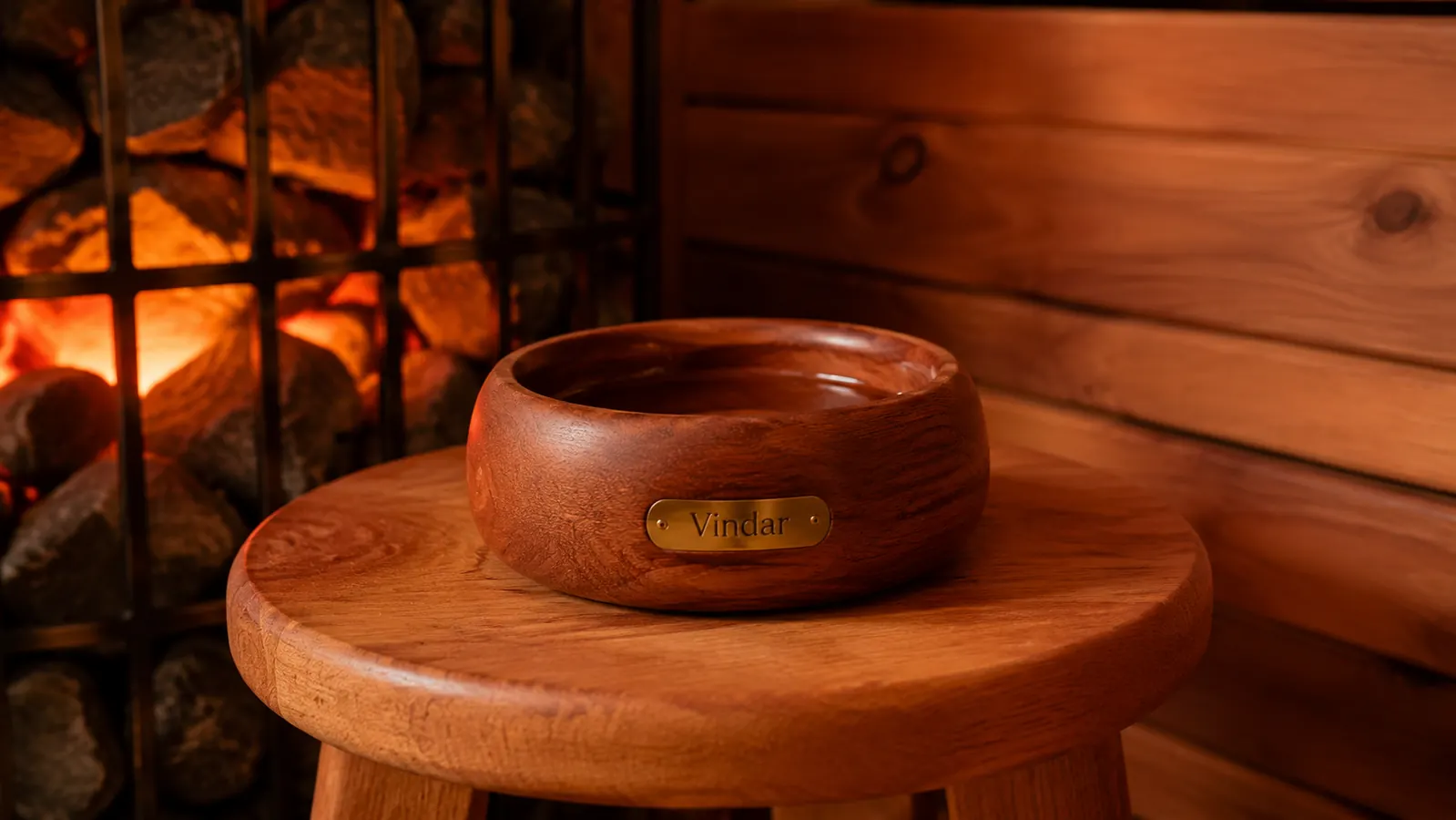
The Vindar cedar bowl solves this by being small enough to tuck into a bench corner without taking up real space, and being made of a single piece of wood rather than anything with a seam that could warp near heat. I set mine on the corner of the bench closest to the door, a solid three feet from the rocks, and it's never once gotten hot enough to worry me, even after a long session.
The placement rule matters even more if you have a wood-burning heater rather than an electric one, since an open flame nearby raises the stakes if oil ever splashes or drips near the firebox. I keep the bowl a bit further from a wood-burning stove than I would from an electric heating element, just to build in extra margin for error.
If you don't have a dedicated bowl yet, a small heat-safe dish works in a pinch, but avoid anything glazed ceramic that can feel uncomfortably hot to the touch, or anything plastic that has no business being anywhere near sauna heat. The goal is the same regardless of what holds the oil: essential oils in a sauna should warm gently from ambient heat, not sit directly on or beside an active heat source.
Step 3: Dilute and Dose Conservatively, Then Adjust
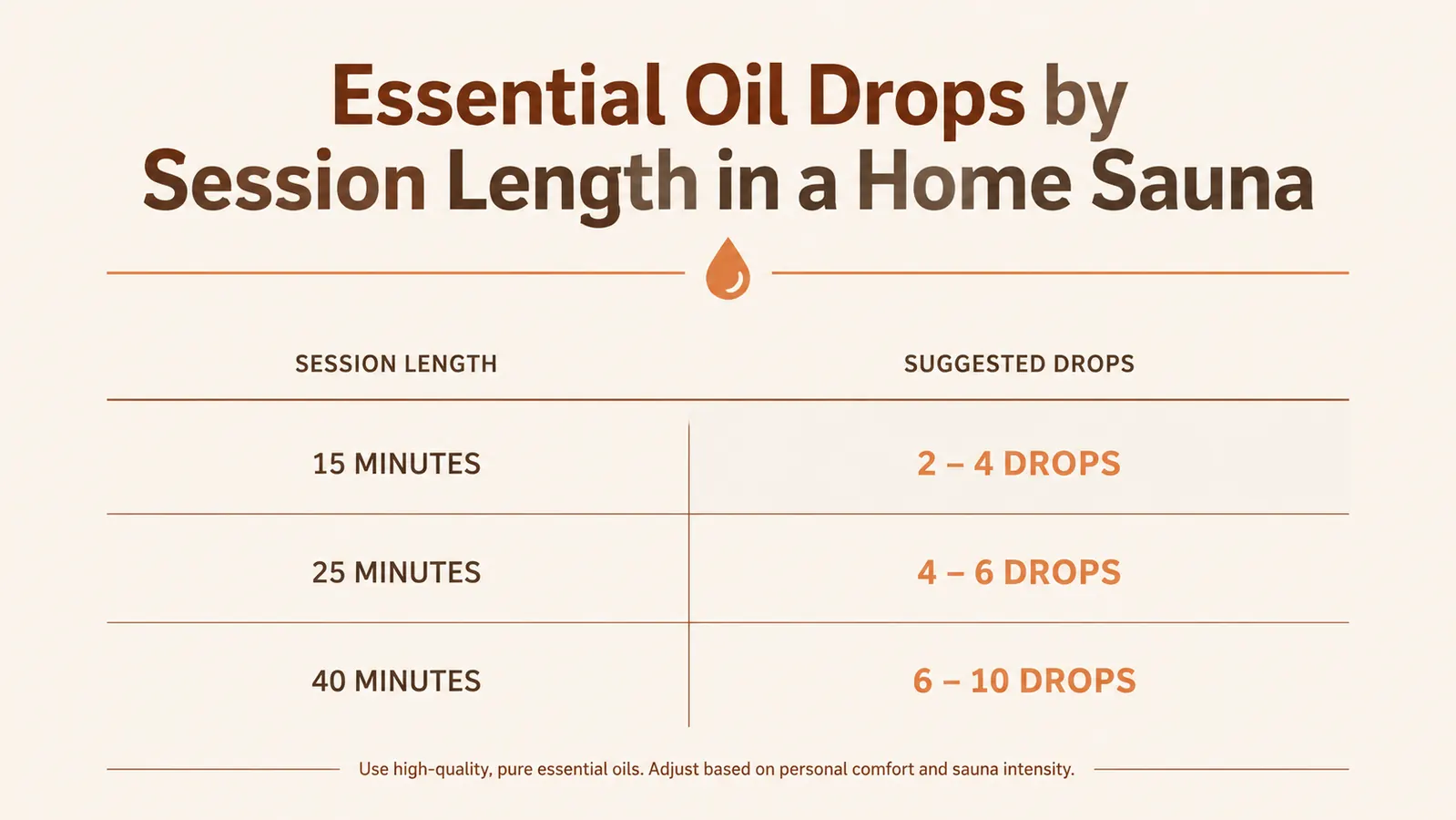
I start with three to four drops in the bowl for a typical twenty to twenty-five minute session, nothing more. A sauna is a small, sealed space, and scent builds up fast in a way it never would in an open room. My first real mistake was assuming that if four drops smelled nice, eight would smell twice as nice, and instead I ended up with a headache and had to step out early to clear my head.
For longer sessions, closer to forty minutes, I might go up to five or six drops, but I add them gradually rather than all at once, checking how the room feels after the first ten minutes before deciding whether to top it off. Some nights I skip the oil at the halfway point entirely and just enjoy plain heat for the second half, which resets my nose and keeps the scent from feeling stale by the end.
A shallow layer of oil in the bowl also releases more evenly than filling it to the rim. A friend who's used a bowl like this longer than I have pointed out that a thin coat across the bottom warms and releases scent steadily through a session, while a deep pool tends to hit you with a strong burst early and taper off fast. Once I switched to a shallow fill, the scent felt like a steady presence rather than a sudden wall of smell when I first sat down.
Step 4: Watch Airflow, Session Length, and How Your Body Responds
Ventilation matters more than people expect. I crack the door slightly or run a low exhaust fan if my sauna is attached to a bathroom, mostly so the scent doesn't build to an overwhelming level in a fully sealed space. A little airflow keeps the experience pleasant rather than heavy, and it also helps clear the room faster once the session ends, so the next person in isn't walking into a wall of scent.
I also pay attention to how I'm actually feeling, not just how the room smells. If my eyes start watering or I notice a headache creeping in, that's my signal to step out for a minute rather than push through it. This goes double if you're sharing the sauna with someone else, since what smells pleasant to me might be too strong for my husband Mark, who's pickier about scent and mostly sticks to plain eucalyptus at half the dose I'd use on my own.
I never apply essential oil directly to my skin before stepping into the sauna. Heat intensifies whatever's on your skin, and a drop that felt fine at room temperature can feel uncomfortably strong once your pores open up in the heat. If I want a scent on my body rather than just in the air, I do that outside the sauna, well before the session, not as part of the routine inside.
If you're new to sauna aromatherapy or have any sensitivity to strong scents, a shorter first session, fifteen minutes rather than twenty-five, is a smart way to see how you personally respond before committing to a longer routine.
Step 5: Clean the Bowl and Store Oils Properly Between Sessions
I wipe the bowl out with a soft cloth after most sessions and give it a proper wash with mild dish soap and warm water about once a week. Skipping that weekly wash for a few weeks in a row left a slightly gummy residue building up along the bottom of mine that took real scrubbing to lift, so staying on top of it weekly keeps the whole ritual low-maintenance instead of turning into a chore.
Between sessions, I keep my oil bottles capped tightly and stored somewhere cool and out of direct sunlight, away from the sauna itself. Heat and light both break oils down faster over time, and a bottle left sitting near a warm sauna room won't last nearly as long as one stored in a regular cabinet. I keep mine on a small shelf just outside the door along with the bowl and a glass dropper, so the whole routine of adding oil takes under thirty seconds before I even step inside.
What Else Helps Once the Basics Are Routine
Once using essential oils in a sauna safely becomes second nature, a couple of small additions make individual sessions better. A basic kitchen thermometer near the bench gives you a rough sense of how warm the room actually is, which helps you judge how strong a scent will feel before you commit to a full dose. Rotating between two or three oils rather than always reaching for the same bottle also keeps your nose from getting used to one scent, so eucalyptus still feels noticeable on the nights you use it instead of fading into the background.
A simple wood backrest on the bench is another small addition that pairs well with an aromatherapy routine, since it lets you settle in and actually notice the scent through a full session instead of shifting around uncomfortably. And keeping a tiny log, even just a note on your phone of which oil and how many drops you used each night, makes it easy to repeat the sessions that worked and skip the combinations that didn't.
The safest way to use essential oils in a sauna isn't about finding the strongest scent. It's about giving the oil somewhere to sit that isn't the heater, and giving yourself somewhere to step out if the room gets too full of it.
Give Your Oil Somewhere Better to Sit Than the Rocks
The Vindar red cedar aromatherapy bowl is the tool behind every step in this guide. Check today's price and current availability before your next bottle of oil flashes off in ninety seconds flat.
Amazon Check Today's Price on Amazon →