
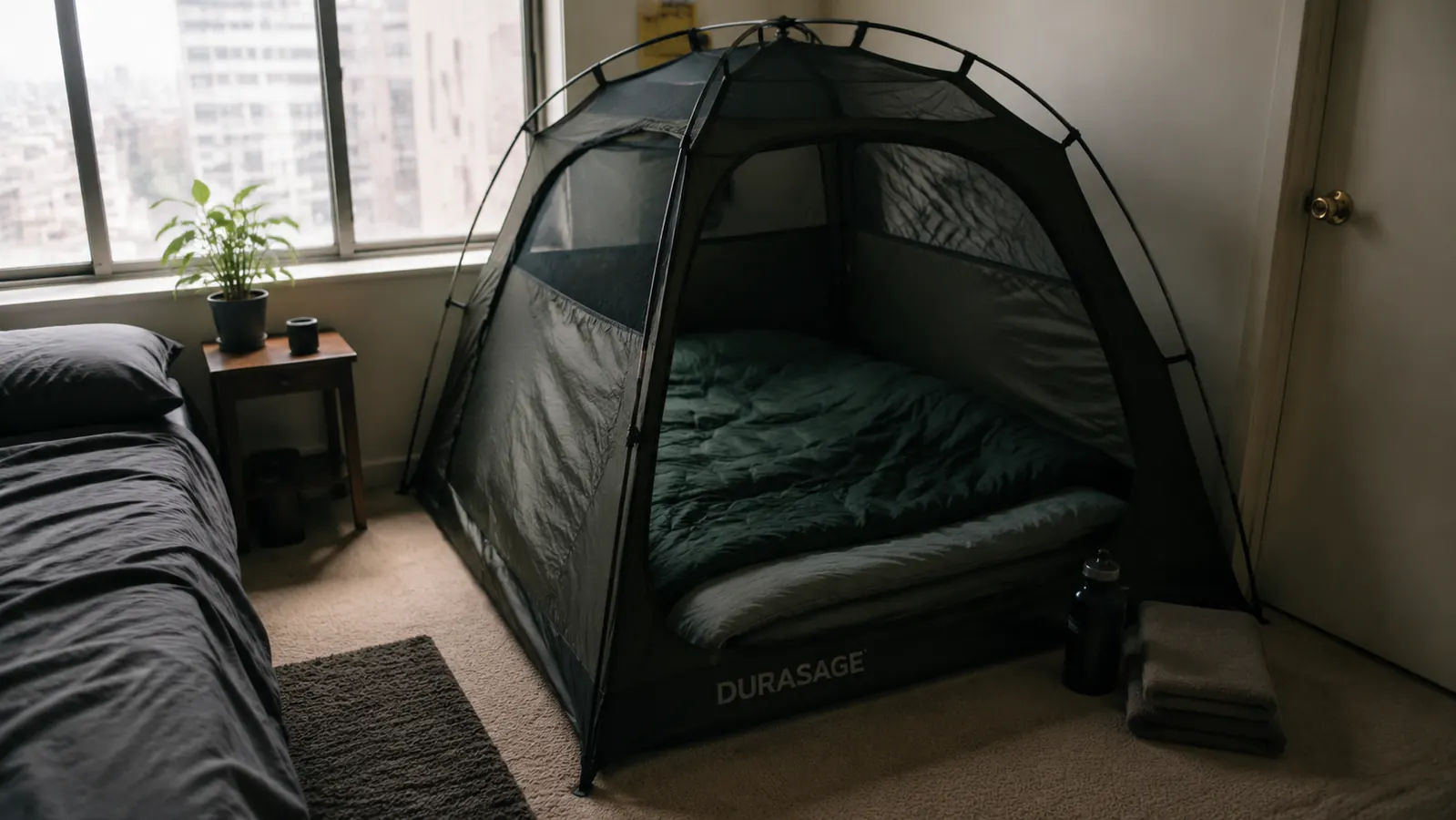
Nobody posts a video of themselves mopping condensation off the floor at 9:40pm, which is exactly what I was doing three weeks into owning the Durasage Portable Steam Sauna. I'd bought it in early April after two years of remote graphic design work left my neck and upper back in a near-permanent knot, and my husband Tom was skeptical the second the box showed up. It looked, in his words, like camping gear that got lost on its way to a spa. I've now used it several times a week for about eight weeks in our small two-bedroom apartment in Denver, and I want to talk about the parts that don't show up in the glowing five-star reviews or the polished product photos.
This isn't going to be a takedown. The Durasage does what it says it does, and at its current price it's a reasonable way to get a steam habit going without renovating a bathroom. But there's a real gap between how this thing looks in marketing photos, calm person, steam gently curling, spa music implied, and how it actually behaves in a normal apartment with normal outlets, normal flooring, and a normal amount of patience left after a workday. Here's what I wish someone had told me before I unboxed it, section by section, so you can decide with open eyes instead of finding out the hard way like I did.
The Quick Verdict
A genuinely relaxing, low-cost way to build a steam habit at home, but the setup friction, cord length, and cleanup routine are more work than the reviews let on.
Amazon Check Today's Price →Wondering if the annoyances are worth the tradeoff?
Check today's price and current availability before you decide. Most of what I cover below still applies at any price point, but it's worth knowing what you'd actually be paying before you weigh it against the setup and cleanup routine ahead.
Amazon Check Today's Price on Amazon →How I've Actually Used It
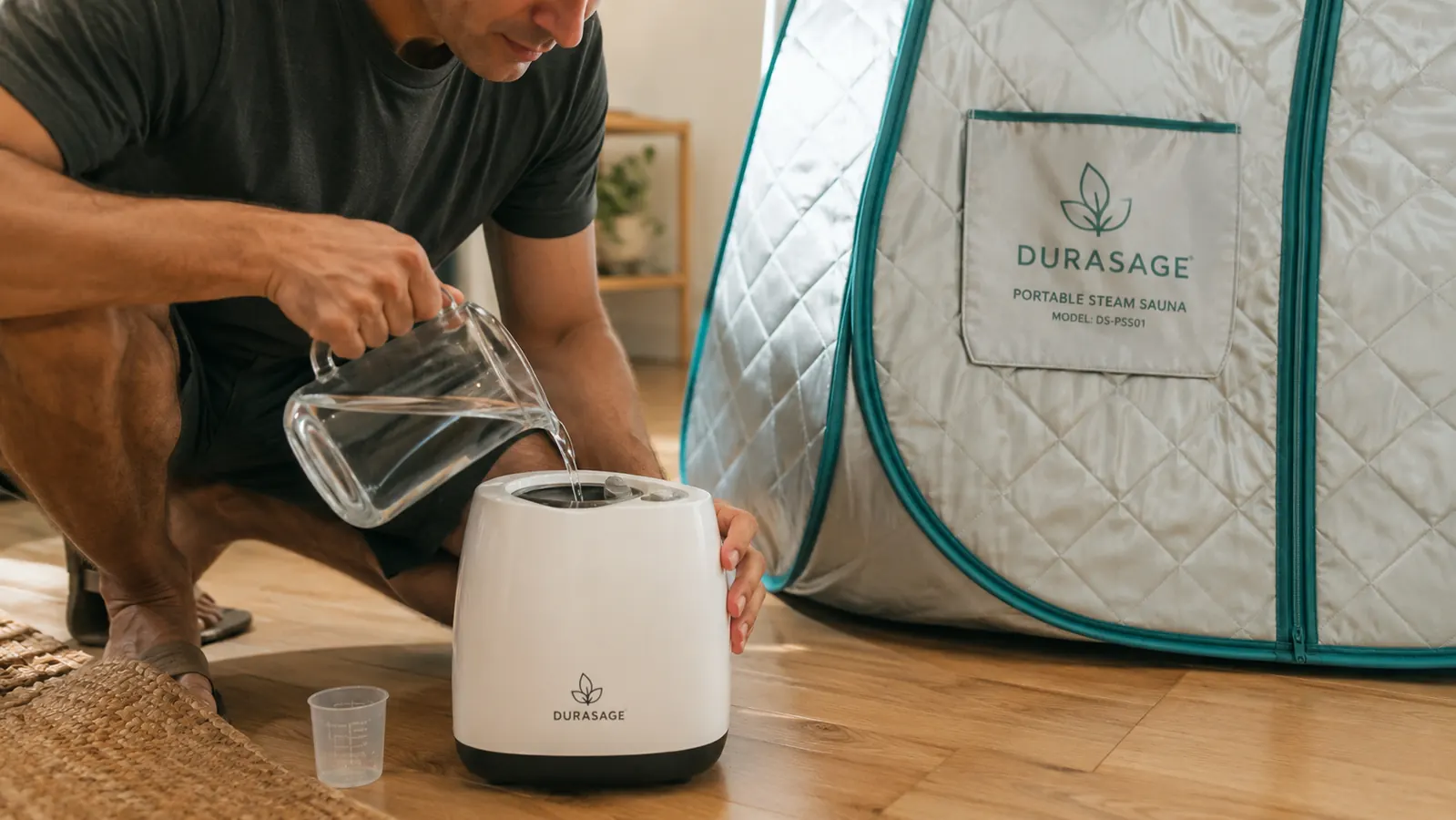
My routine settled into something like three or four sessions a week, usually in the evening after Tom and I have eaten dinner and before either of us wants to think about tomorrow. The tent lives folded in our spare room closet between uses, which means every session starts with a small unpacking ritual rather than a walk-in-and-sit-down experience. I unfold the tent, snap the frame poles into place, set the folding chair inside, connect the steam hose to the generator, and fill the reservoir. Start to finish, that's roughly six or seven minutes on a good night, longer if I'm hunting for the water pitcher or the towel I meant to leave in the closet last time.
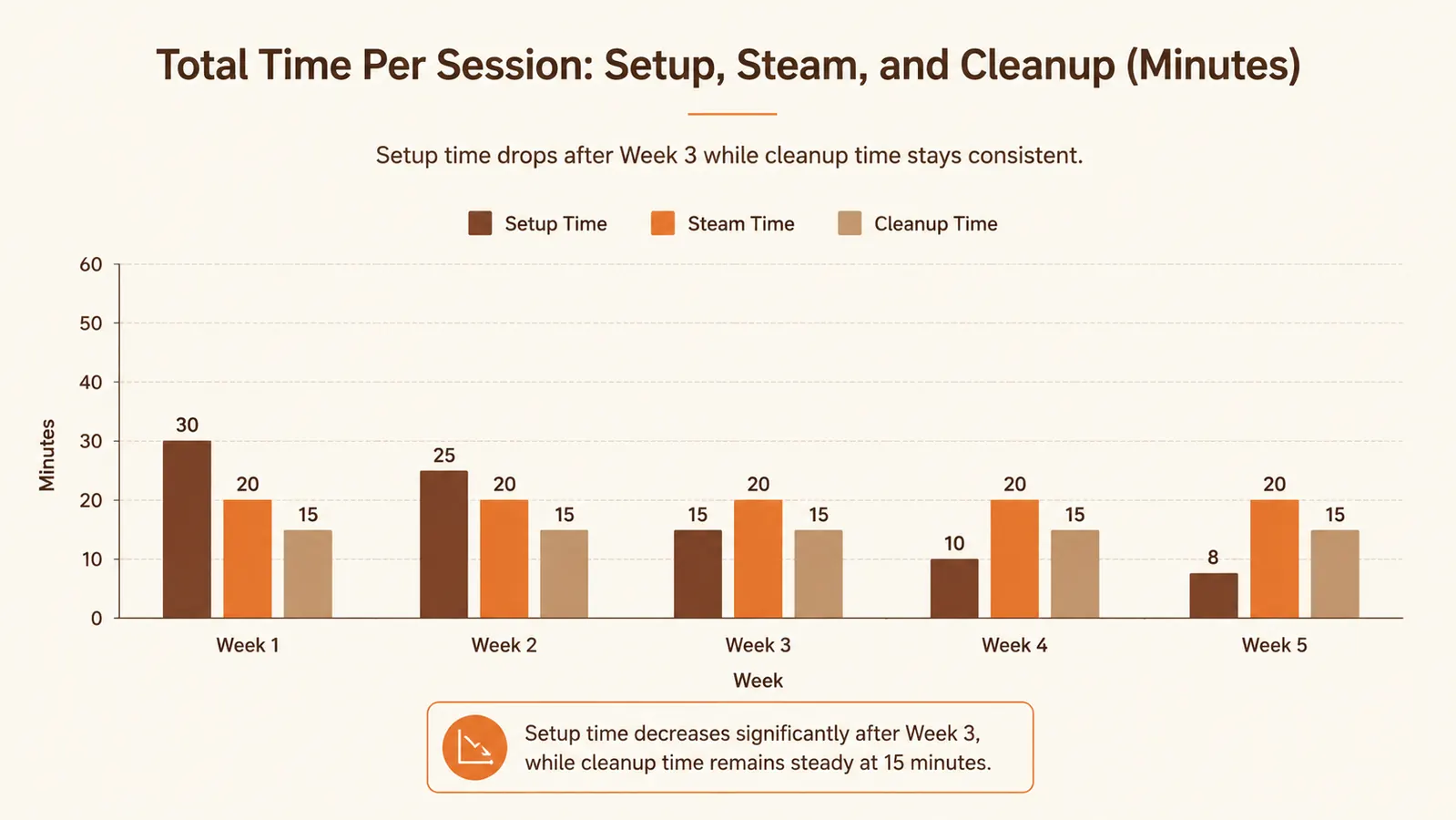
I want to be specific about the timing because I think it matters more than most reviews admit. From plugging in the generator to feeling real steam at the collar opening, I'm consistently looking at 11 to 13 minutes with room-temperature tap water. That's not a dealbreaker, but if you're picturing something you use for a spontaneous 15-minute reset between meetings, recalibrate. This is closer to a 45-minute commitment once you count setup, a 25 to 30 minute session, and teardown, and I've learned to just block that time on my calendar the same way I would a workout.
The spare room where it lives is small, maybe 9 by 10 feet, and the tent plus chair take up a noticeable chunk of the open floor. I have to slide our reading chair out of the way every time, which is a small thing that becomes a slightly bigger thing on week six when the novelty has worn off and you're tired and just want to sit down. If you have a dedicated corner where it can stay semi-permanently assembled, a lot of this friction disappears. We don't, so it hasn't, and I've made peace with that being part of the deal.
What has stayed consistent, and this matters given how much I've complained above, is how I feel afterward. The loose, slightly heavy sensation in my shoulders and neck shows up reliably, usually within the first 15 minutes of steam, and it lingers into the next morning more often than not. That part of the product's promise has held up under real, repeated use, which is more than I can say for a few other wellness gadgets currently gathering dust in our closet, including a foam roller Tom bought me that I've used exactly twice.
I've also noticed my patience for the setup ritual has grown, not shrunk, over eight weeks. The first two weeks felt like a chore. By week five it had become closer to a habit I look forward to, the same way making tea becomes part of the wind-down instead of a step in the way of it. I mention that only because if you're reading this before your first session, the friction I describe below does ease with repetition, it just doesn't disappear entirely.
The Setup Quirks Nobody Mentions in the Five-Star Reviews
The power cord on the steam generator is short, short enough that our nearest usable outlet meant running it along the baseboard and taping the cord down so nobody catches a foot on it in the dark. I ended up buying a basic extension cord specifically for this, which is a five dollar fix but also a detail that would have been useful to know before delivery day, not after I'd already unpacked everything and realized the outlet on the far wall was out of reach.
The timer beeps. It beeps at a volume that seemed almost aggressive the first time it went off while I had my eyes closed mid-session, enough that Tom heard it through a closed door and asked if something was burning. You get used to it, but if you're using this as a wind-down before bed in a quiet apartment, that alarm is not a gentle chime, it's a genuine alert tone, and I now mentally brace for it around the 20-minute mark of every session.
New unit smell was noticeable for the first four or five sessions, a plasticky PVC scent that faded but was present enough that I ran the first two sessions with the tent's neck opening cracked slightly wider than instructed, just to air it out while it broke in. Nobody mentions this in the marketing copy, understandably, but it's common enough with PVC-lined products that it shouldn't be a surprise if you buy one of these.
The folding chair inside wobbles slightly on our apartment's slightly uneven hardwood, enough that I now keep a folded towel under one leg to level it. It's a minor annoyance, not a structural concern, but if you're someone who gets thrown off by small physical distractions during something meant to be relaxing, it's worth knowing about ahead of time rather than discovering it mid-session like I did.
The frame poles that give the tent its shape took me two full sessions to stop fumbling with. They're color coded, which helps, but the first attempt at assembly took closer to fifteen minutes because I was reading the little diagram on the box upside down without realizing it. Once you've done it three or four times it becomes muscle memory, but that first week has a real learning curve that the one-minute unboxing videos online do not show.
What Cleaning It Really Involves
This is the section I think gets glossed over the most. After every single session, there is visible condensation pooled on the tent floor and sometimes a small amount that escapes past the neck collar onto the surrounding carpet or hardwood. I keep an old bath towel down as a mat every time now, non-negotiable, because skipping it once left a damp ring on our rug that took a full day to dry out and left me paranoid about mold for a week after.
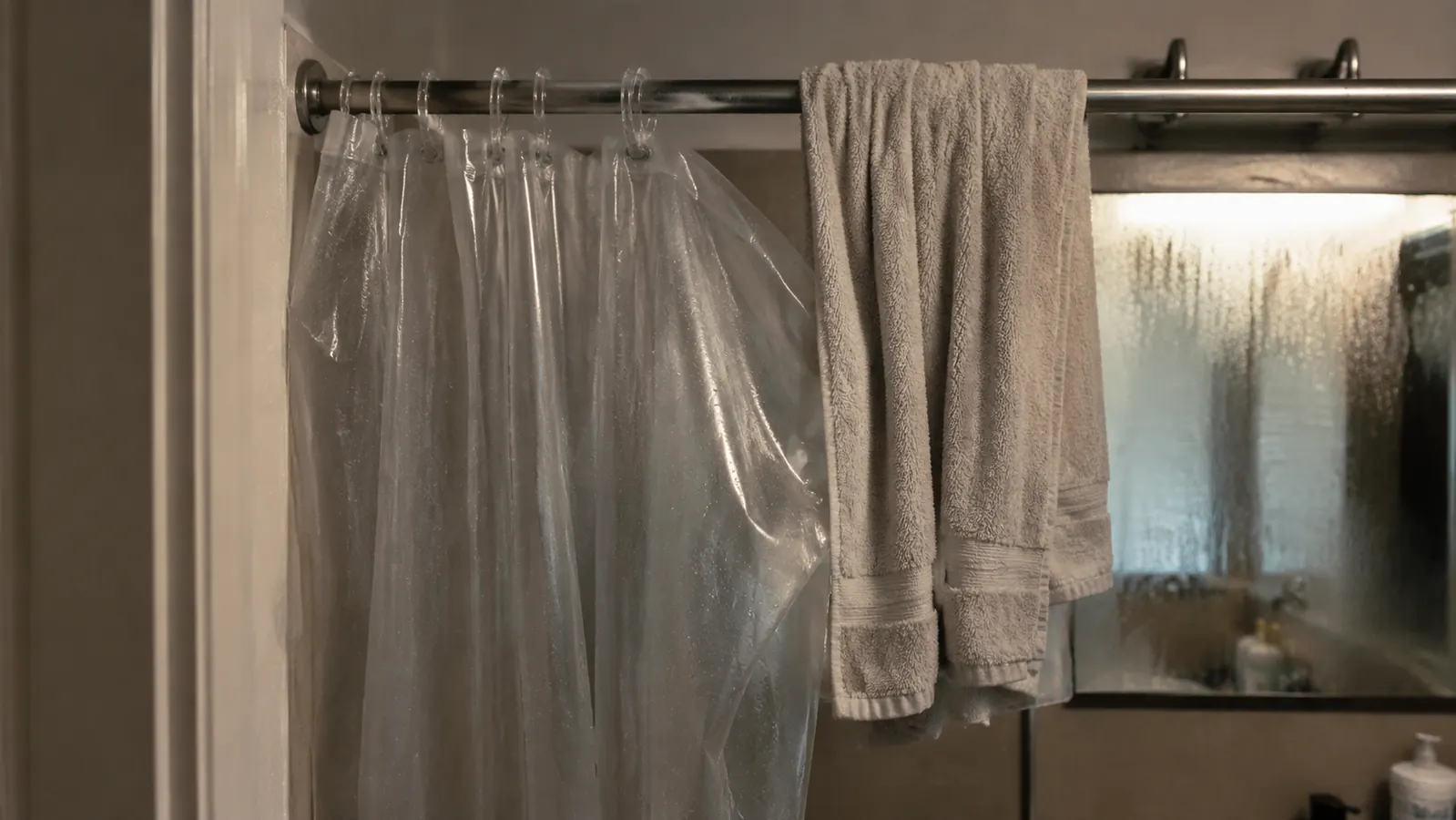
The tent lining itself needs wiping down after each use or it starts to smell faintly musty within a couple of days, especially in a Denver spring when the air outside is dry but the tent interior stays humid for hours after a session. I wipe it with a microfiber cloth, unzip it fully, and drape it over our shower rod for at least an hour, sometimes overnight, to air dry completely before folding it back into storage. Skipping this step even once made the whole tent smell noticeably different the next time I unfolded it.
Roughly every two to three weeks, depending on how often I've used it, the generator needs a descale. Our Denver tap water isn't the hardest in the country, but mineral buildup on the heating element shows up as small white flecks and a slightly longer heat-up time if I ignore it. A vinegar and water rinse cycle handles it, but it's an extra 20 minutes of maintenance that a lot of reviews simply don't mention, probably because most people writing glowing five-star reviews haven't owned the thing long enough to hit that point yet.
I've settled into switching to filtered water in the reservoir on weeks I know I'll use it four or more times, which stretches the interval between descales noticeably. It's not a fix so much as a delay, but it's a small habit that's made the maintenance side of ownership feel less like a chore and more like a routine, similar to how I remember to clean a coffee maker on a schedule instead of waiting for it to taste off.
The Steam Experience: What's Real and What's Marketing
Once it's actually running, the steam output itself is legitimately strong. I'm not exaggerating when I say visible steam pours from the collar opening within the first couple minutes of a fully sealed tent, and the humidity inside builds fast enough that I'm usually lightly sweating by minute eight or nine. On that front, the product does not underdeliver, and this is genuinely the part that made me stick with it past the awkward first few sessions.
What the marketing photos don't show is that the humidity doesn't stay perfectly contained. In our smaller apartment, a 25-minute session noticeably raises the humidity in the entire spare room, enough that I now crack the window slightly during colder months or run a small fan afterward to clear it out. If you live somewhere humid already, or in a studio with no separate room to close off, factor that in before you assume it will feel exactly like the photos suggest.
The head-out, body-in design took me three sessions to stop feeling claustrophobic about. The first time, I unzipped it halfway through because the sensation of being enclosed with only my head free felt more like a pop-up changing tent than a spa experience I'd been picturing. By session three it felt normal, even pleasant, but I don't want to undersell that adjustment period for anyone who hasn't used an enclosed steam tent before, because I nearly returned it after that first uncomfortable try.
I also want to be honest that the intensity setting only goes so far. On the highest setting, the steam is strong and consistent, but it never gets aggressively hot the way I remember a public gym's steam room feeling. If you're chasing that intense, almost-too-much heat, this stays a notch or two below it, comfortable rather than overwhelming, which some people will prefer and others will find underwhelming.
What I Liked
- Genuinely strong steam output once it gets going
- Consistent post-session relaxation feel, not just a placebo week one
- Folds down small enough for closet storage between uses
- Noticeably cheaper than an infrared cabin or a home sauna renovation
- Chair and tent have held up fine after roughly 30 to 35 sessions
Where It Falls Short
- Power cord is short, likely needs an extension cord
- Timer alarm is loud, not a gentle chime
- Noticeable new-unit PVC smell for the first several uses
- Condensation on the floor every session, a towel underneath is basically required
- Descaling and full lining dry-out add real maintenance time every few weeks
The steam itself never disappointed me once. The forty minutes of setup, condensation, and cleanup wrapped around it, that's the part the reviews leave out.
Who This Is For
This suits someone who wants a real, repeatable steam habit without renovating a bathroom or committing to a standalone infrared cabin, and who has a spot, even a modest one, where the tent can live semi-assembled or be unpacked without much hassle. It also suits people who are realistic about the time commitment being closer to 45 minutes than 15, and who don't mind a small maintenance routine in exchange for a noticeably lower price than most home sauna alternatives I priced out before buying this one.
Who Should Skip It
If you live somewhere with no separate room to contain the humidity, or you're hoping for a five-minute in-and-out experience, this will frustrate you. Anyone who dislikes small maintenance tasks, descaling, drying lining, wiping condensation, will find the upkeep tedious rather than relaxing. And if a loud alarm tone or a slightly claustrophobic first session is a dealbreaker for you, it's worth sitting with that before you buy rather than after, the way I wish I had.
Still sounds worth it once you know what to expect?
If the tradeoffs above are ones you can live with, the value here is still solid compared to the alternatives I looked at before buying. Check the current price and availability before it changes.
Amazon Check Today's Price on Amazon →